


Ever wondered what sets para alpine skiing apart from the regular downhill races you see at the Olympics? And do you wonder how para alpine skiing differs from regular skiing? Whether you’re a snow enthusiast or new to the Winter Paralympic Games, this guide breaks it down for you.
Get ready to see why para alpine skiing delivers pure adrenaline and inspiration, especially with the Milano Cortina 2026 Paralympic Games on the horizon. Para alpine skiing isn’t just adapted skiing; it’s a high-speed showcase of resilience.
Keep reading to uncover its unique edge over standard alpine skiing. Explore how para alpine skiing differs from regular skiing.
Core Differences from Regular Skiing
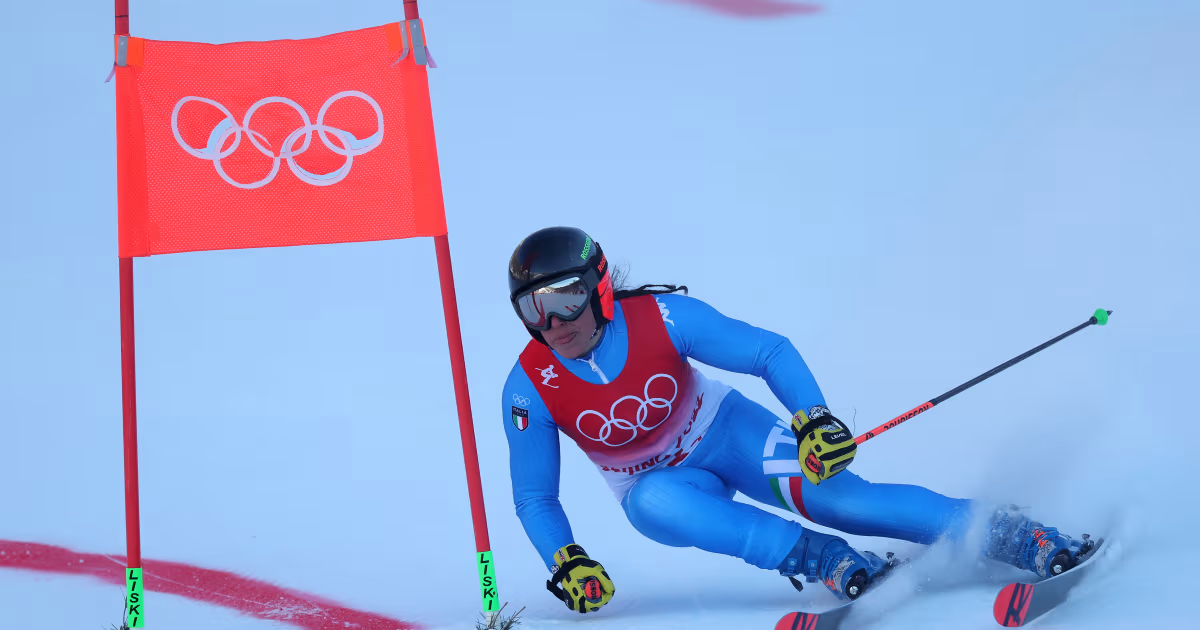
Para alpine skiing adapts traditional alpine disciplines for athletes with physical disabilities, making it accessible yet fiercely competitive. Unlike regular skiing, where everyone uses standard two skis and poles, para alpine introduces specialized gear like sit-skis and outriggers to level the field based on ability.
Regular skiing focuses purely on speed and technique for non-disabled athletes, but para alpine skiing emphasizes functional classifications to ensure fair racing. This creates edge-of-your-seat action at speeds up to 100 km/h, just like the pros, but with adaptive twists that highlight human potential.
Both share the thrill of gates and groomed slopes, yet para alpine skiing stands out at the Milano Cortina 2026 Paralympics, the 14th edition of the Winter Paralympic Games. And, also as an international winter multi-sport parasports event.
If you want a refresher on how regular alpine skiing works at the Olympics, Ski breaks it down in Ski Explains Alpine Skiing in the Winter Olympics.
Brief History
Para alpine skiing traces back to post-World War II Europe, where injured veterans in Germany and Austria pioneered adaptive techniques on snowy slopes. By 1948, the first courses emerged, leading to its debut at the 1976 Winter Paralympics in Sweden with just slalom and giant slalom for standing athletes.
It exploded globally under the International Paralympic Committee and International Ski Federation (FIS), evolving into a staple of the Winter Paralympics in Milano Cortina. Today, it’s a beacon for Winter Para Sport, inspiring millions ahead of the 2026 Paralympic Winter Gamesin Milano Cortina.
What Are The Para Alpine Skiing Rules and Disciplines?
The para alpine skiing rules mirror the International Ski Federation’s regular standards for skiing. But they adapt for safety and equity; missing a gate results in disqualification. Hence, the times determine winners across one or two runs.
Key disciplines include:
- Downhill: Longest, steepest course; one run at max speeds over 100 km/h.
- Super-G: Mid-length speed event with wider turns.
- Giant Slalom: Longer technical course with 30-35 gates.
- Slalom: Shortest, tightest turns with 50-75 gates over two runs.
- Super Combined: Speed run (downhill or Super-G) plus slalom.
Para alpine skiing adds team events in some comps, unlike regular skiing’s solo focus. Ready to meet the stars? Explore the animated Winter Sports adventures.
Specialized Equipment
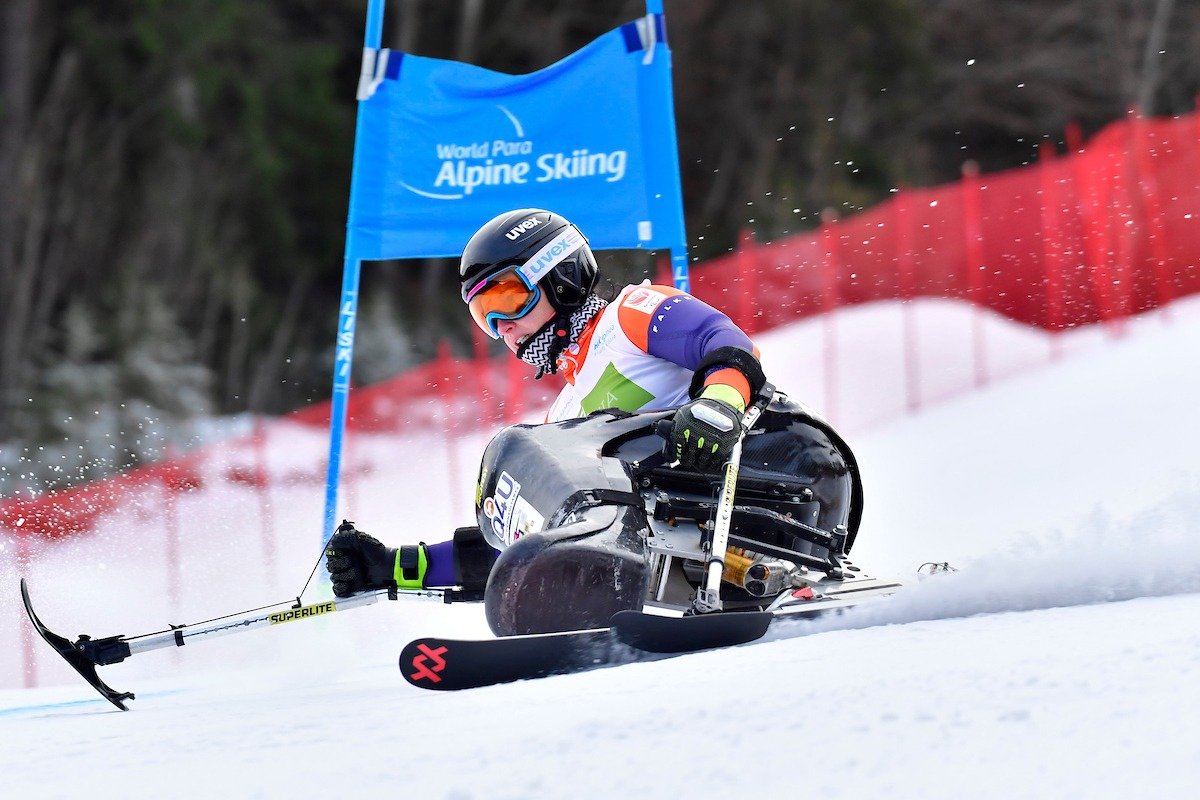
Forget standard skis, para alpine skiing demands custom rigs for different impairments. Standing athletes use outrigger poles, with short skis at the ends. For balance, visually impaired athletes rely on guides via radio. Whereas, the lower-limb-challenged competitors strap into monoskis or sit-skis with shock-absorbing buckets and adjustable struts.
Skis are longer for stability (men’s min 165 cm, women’s 155 cm), bindings max 55 mm high. The poles are often bent for tucks. Regular skiing sticks to twin-tip skis and straight poles. This requires no adaptations. Thus, the gear shines at the Milano-Cortina 2026 Paralympic Games, powering epic runs. To see how ice and snow themselves change the way every Winter Sport is played, check out Why Ice and Snow Change Everything.
Athlete Classification
Fair play rules via three groups:
- Standing: Leg impairments; one/two skis + outriggers.
- Sitting: No trunk control; sit-skis or monoskis.
- Visually Impaired: Guides lead; tethered or verbal cues.
Sub-classes (e.g., LW2-LW9) factor vision levels or limb loss, ensuring skill wins over disability. Regular skiing has no such system and is purely based on age/gender splits.
Countries and Athletes Participating
Over 50 nations compete in para alpine skiing, with powerhouses like the USA, France, Canada, and Germany dominating. The Milano Cortina 2026 Winter Paralympics are expected to host 500+ athletes across all events, with para alpine drawing 100-150 racers.
Top countries: USA (strong in standing), Austria (speed kings), and Slovenia (technical masters). Follow the action in this global Winter Para Sport showdown.
Record Breakers and Leaders
Previous standouts include USA’s Andrew Kurka (2018 downhill gold) and France’s Marie Bochet (multiple golds). The world record holder in downhill speed is often debated, but feats like 130 km/h+ in Super-G set benchmarks.
The USA has historically led the overall medal count, with 100+ across the Winter Paralympics. Eyes on them for Milano Cortina 2026 Paralympic Winter Games.
Gear up with Ski, our positive captain who lives for mountain thrills. Shop Ski Collection for Winter Sports spirit.
Why It Thrills Ahead of Milano Cortina 2026
Para alpine skiing elevates regular skiing by blending raw speed with adaptive genius. At the same time, it has the same slopes and bolder stories. From sit-ski launches to guided slaloms, it proves that limits are made to be shattered. Want to keep exploring winter sports? Browse more stories in our Winter Sports Blog.
FAQs on Para Alpine Skiing
How fast do para alpine skiers go?
The para alpine skiers go up to 100+ km/h. They almost match the regular skiing peaks thanks to aero tucks and long skis.
What’s new for Milano Cortina 2026 Paralympics?
Full disciplines plus potential team relays; first Italian host since 2006 Turin.
Can anyone try para alpine skiing?
Yes! Adaptive programs worldwide offer lessons in outriggers or sit-skis.
How does classification work exactly?
Impairment tests assign groups; no doping or unfair edges allowed.
Which nation dominates para alpine skiing?
The USA leads in medals, but France and Canada are close behind.
Join the Aniletes Winter Sports Journey
From Ski’s endless energy to Board’s daredevil vibe, The Aniletes capture the heart of para alpine skiing and all Winter Para Sport. Whether chasing Milano Cortina 2026 Winter Paralympics excitement or everyday thrills, embrace positivity on the slopes.
So, if you’re interested in discovering The Aniletes, your animated crew for Winter Sports World. Contact us at 435-714-9493 or email us from Jacksonville, FL.