



Picture the electric chill of a packed arena, blades carving ice, sticks clashing, and pucks zipping at speeds that steal your breath. That’s the world of para ice hockey at the Milano Cortina 2026 Winter Paralympics, a fierce, fast adaptation of regular ice hockey designed for athletes with lower-body impairments.
You’ll witness players strapped into low-slung sledges, using double-ended sticks to propel themselves and strike the puck, all while the crowd roars for every bone-crunching check and pinpoint pass. Running March 6-15, 2026, in Milan and Cortina d’Ampezzo, these games pit eight powerhouse nations against each other at the Milano Santagiulia Ice Hockey Arena.
Para ice hockey vs regular ice hockey isn’t just a sport showdown; it’s a testament to human grit, where strategy meets raw power on a full-sized rink. Whether you’re glued to NHL highlights or new to adaptive sports, this comparison pulls you into the heart of why para ice hockey captures the same thrill with its own unbreakable spirit. Check out things to know about Milano Cortina 2026 Winter Paralympics ice hockey for essential game details.
Keep on reading the blog to learn to see why these athletes redefine what’s possible on frozen water, pure adrenaline waiting for you.
Key Differences
Here are the key differences:
Sledges vs Skates
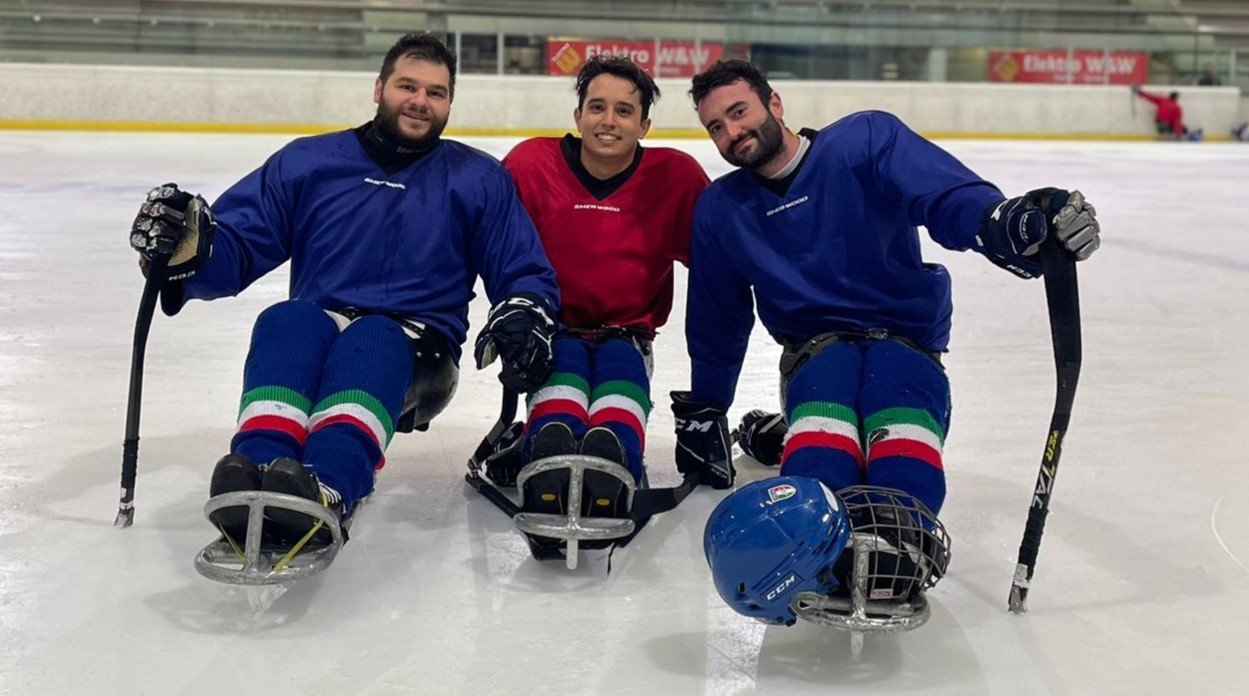
Para ice hockey trades your skates for sledges, sleek metal frames with dual blades that keep you inches above the ice. You’re gliding low, puck sliding right under your sledge, while regular players tower above on razor-sharp skate edges. This low center of gravity changes every tackle into a full-body collision.
Dual Sticks Revolution
Sticks do double duty here: one end’s a spike for digging into ice to push off, the other a blade for handling the puck. Regular ice hockey gives you one curved stick for stickhandling and shooting; no propulsion is needed when your legs do the work. You’ll see para players master both in split seconds.
Shorter, Fiercer Periods
Games clock three 15-minute periods of pure chaos, shorter than regular 20-minute shifts. This amps the intensity; there are no long line changes, just relentless end-to-end action. Body checks hit harder, too; sledges don’t stop on a dime like skates, so collisions feel like freight trains meeting head-on.
About the Games
14th Winter Paralympics Spotlight
Milano Cortina 2026 marks the 14th Winter Paralympics, blending Olympic legacy with para innovation across six sports. Para ice hockey sits front and center, one men’s tournament drawing global eyes from March 7-15. Italy’s home ice adds electric passion.
Eight Nations Battle
Eight teams qualify: Canada, China, Czechia, Germany, Italy (hosts), Japan, Slovakia, USA. They split into two groups for round-robin prelims, top teams advancing to semis and the gold-medal final. Up to 665 athletes total across events, but para ice hockey packs around 120 competitors.
Milano’s Premier Arena
Venues shine: Milano Santagiulia hosts the action, transformed post-Olympics for para speed. Expect sold-out crowds and live global streams. It’s not just games; it’s where nations clash for pride on blades, you’ll feel every goal vibration.
History
1960s Rehab Roots
Para ice hockey traces back to the 1960s in Stockholm, where rehab patients strapped wood blocks to boots for ice mobility. It evolved into sledges by the 1970s, spreading from Sweden to Norway and beyond. Humble beginnings sparked global fire.
Paralympic Debut Glory
The first world championship hit in 1990; Lillehammer 1994 brought the Paralympic debut with Norway taking gold. Since then, it’s grown exponentially; the USA’s dynasty kicked off in 2002. Each game refines the spectacle.
USA’s Golden Streak
Milano Cortina 2026 builds on Beijing 2022’s intensity, where the USA clinched its fourth straight gold. From garage tinkering to packed arenas, para ice hockey proves adaptation fuels evolution; you’re watching history unfold.
Rules
Core Game Unchanged
Rules mirror regular ice hockey: score more goals with six players per side, including a goalie. Faceoffs, icing, power plays, all familiar, but sled tweaks change the game. First to the highest score wins, always.
Sled-Specific Tweaks
No offside if puck passes under sledges; this opens long bombs you can’t pull in regular play. Periods run 15 minutes straight, no TV timeouts, eating pace. Penalties bench you two, five, or ten minutes, sin bin mirrors the NHL.
Safety First Gear
Full-face cages mandatory; sticks can’t exceed 1m. Goalies block with oversized sledges up to 39cm blades. Slashing, spearing, or sled tampering draws majors fast. Our character Puck explains ice hockey at the Winter Olympics; he’d geek out over these high-stakes rules.
Equipment
Sledge Design Basics
Sledges anchor everything: aluminum frames, 16-32cm blade spacing, and a seat under 20cm high. Ratchet straps lock hips securely; padding absorbs checks that’d shatter bones. Built for speed and survival.
Dual-Purpose Sticks
Two sticks max 1m, aluminum shafts with a pick-end for ice digging (T-push propulsion) and puck-end for control. Goalies wield longer versions, blades up to 39cm for sprawling saves. Precision engineering rules.
Full Armor Protection
Helmets, gloves, shin guards, full armor, carbon fiber, lightening the load. Pucks match regulation rubber, but boards get padding upgrades. Maintenance crews sharpen blades mid-game; dull edges kill speed.
Classification
Open-Class Competition
Para ice hockey is open-class, meaning athletes with lower-body impairments compete together, no subgroups. Rosters must include females if applicable, ensuring balanced teams of up to 14 players. Pure skill shines.
Fair Play Focus
This keeps focus on team chemistry over individual categories. Classifications ensure permanent mobility loss; classifiers check pre-games. No handicaps—just hockey heart.
Participating Countries
Powerhouse Contenders
Canada brings depth, perennial silver contenders with gritty defenders. China rises fast, investing heavily post-Beijing. Czechia packs speed; Germany blends vets with youth.
Host Nation Hope
Hosts Italy rally home crowds, featuring talents like Matteo Remotti Marnini. Japan innovates tech; Slovakia surprises with heart. The USA eyes a fifth straight gold.
Number of Athletes
120 Warriors Ready
Around 120 athletes lace up (or blade up) across the eight teams, with rosters like the USA’s deep bench of veterans. Each squad lists 13-14 field players plus two goalies, totaling high-energy lineups.
Mixed Gender Rosters
Rosters blend males and females for fairness, with some women netting game-winners. Total Paralympics hit 665, but para ice hockey’s compact field amps star power. Years of training culminate here.
Record Holders
Josh Pauls’ Legacy
Josh Pauls (USA) holds four golds (2010-22), the most ever. Unmatched clutch play defines Paralympic greatness.
Declan Farmer’s Fire
Declan Farmer scored 11 goals at PyeongChang 2018, sharing the single-Games mark with Canada’s Sylvester Flis. Sniper precision.
Goalie Greats
Steve Cash snagged three golds, one bronze, and was the shutout king before retiring. These legends set bars for Milano.
Leading Country
USA Dynasty Rules
The USA dominates, winning every gold since 2002 and medaling consistently. Twelve medals total, unmatched depth.
Silver Chasers
Canada trails with silvers in recent games; Japan and Norway chase podiums. Milano tests if anyone catches the leaders.
FAQs
What is the main equipment difference between para ice hockey and regular ice hockey?
Players use sledges with double blades and dual sticks for both pushing and shooting in para ice hockey. This setup lets the puck slide under sledges, unlike skates in regular play, where players stand upright.
How many teams are competing in para ice hockey at Milano Cortina 2026?
Eight nations compete: Canada, China, Czechia, Germany, Italy, Japan, Slovakia, and the USA. They split into groups for prelims, then advance to semis and the gold medal final.
Are para ice hockey rules the same as regular ice hockey?
Mostly yes, goals, penalties, and icing rules stay similar, but para ice hockey uses shorter 15-minute periods and sled adaptations. A maximum of 15 players per team roster adds a unique strategy.
When did para ice hockey start and debut at the Paralympics?
Para ice hockey began in the 1960s in Sweden with rehab patients on sleds. It made its Paralympic debut at Lillehammer 1994, with Norway winning gold.
Who holds the most Paralympic gold medals in para ice hockey?
Josh Pauls from the USA holds four Paralympic golds (2010-2022). Declan Farmer’s 11 goals in one game at PyeongChang 2018 set a scoring record.
Where is para ice hockey played at Milano Cortina 2026 Paralympics?
Games take place at Milano Santagiulia Ice Hockey Arena in Milan, Italy, from March 7-15. Schedule runs from prelims through the gold medal final.
Gear Up for Glory: Your Front-Row Seat Awaits
Feel that rush building? Sledges slamming boards, pucks whistling nets, crowds erupting as the USA hunts a five-peat gold in Milano Cortina 2026, para ice hockey vs regular ice hockey proves limits exist to shatter.
This isn’t just a spectator sport; it’s a call to your own fire. At The Aniletes, we celebrate athletes redefining possible, your hub for stories, gear, and community, firing you up daily. Ready to lace up that passion? Get in touch now, grab custom merch, join live discussions, or spark training vibes locally.
Call 435-714-9493, email dennis@theaniletes.com, let’s turn hype into your action. Milano awaits; your front-row journey begins today. Who’s your pick for gold, USA dynasty or Italy upset?