

In 2026, competitive Android skiing games are no longer just endless runners with canned AI; they are evolving into AI‑enhanced mobile ice skiing experiences where the mountain itself learns from the player. From adaptive AI skiing movement mechanics to AI‑powered PvP skiing, modern titles blend real‑time AI mobile gaming with context‑aware AI skiing mechanics to create environments that feel as dynamic and competitive as a real‑world winter sports event.
For studios or teams building on Android, the key to ranking for “AI‑enhanced mobile skiing game”, “competitive Android ski game”, and “skiing app AI” lies in how deeply AI is woven into the core mechanics, not just the marketing copy.
Keep reading the blog to learn more about AI-Powered Mobile Skiing Mechanics for Competitive Android Games.
What Makes a Skiing Game Competitive on Android?
Before diving into AI, it’s important to understand what “competitive” actually means in a mobile skiing context.
A competitive Android ski game needs to offer:
- Skill‑based inputs (turns, air‑timing, edge‑control) that actually reward precision.
- Dynamic opponents rather than fixed‑time competitors.
- Procedural or adaptive tracks that change difficulty based on player performance.
Without these, a title is just a casual Alpine‑style racer; with them, it starts to feel like a competitive AI ski simulator, Android 2026.
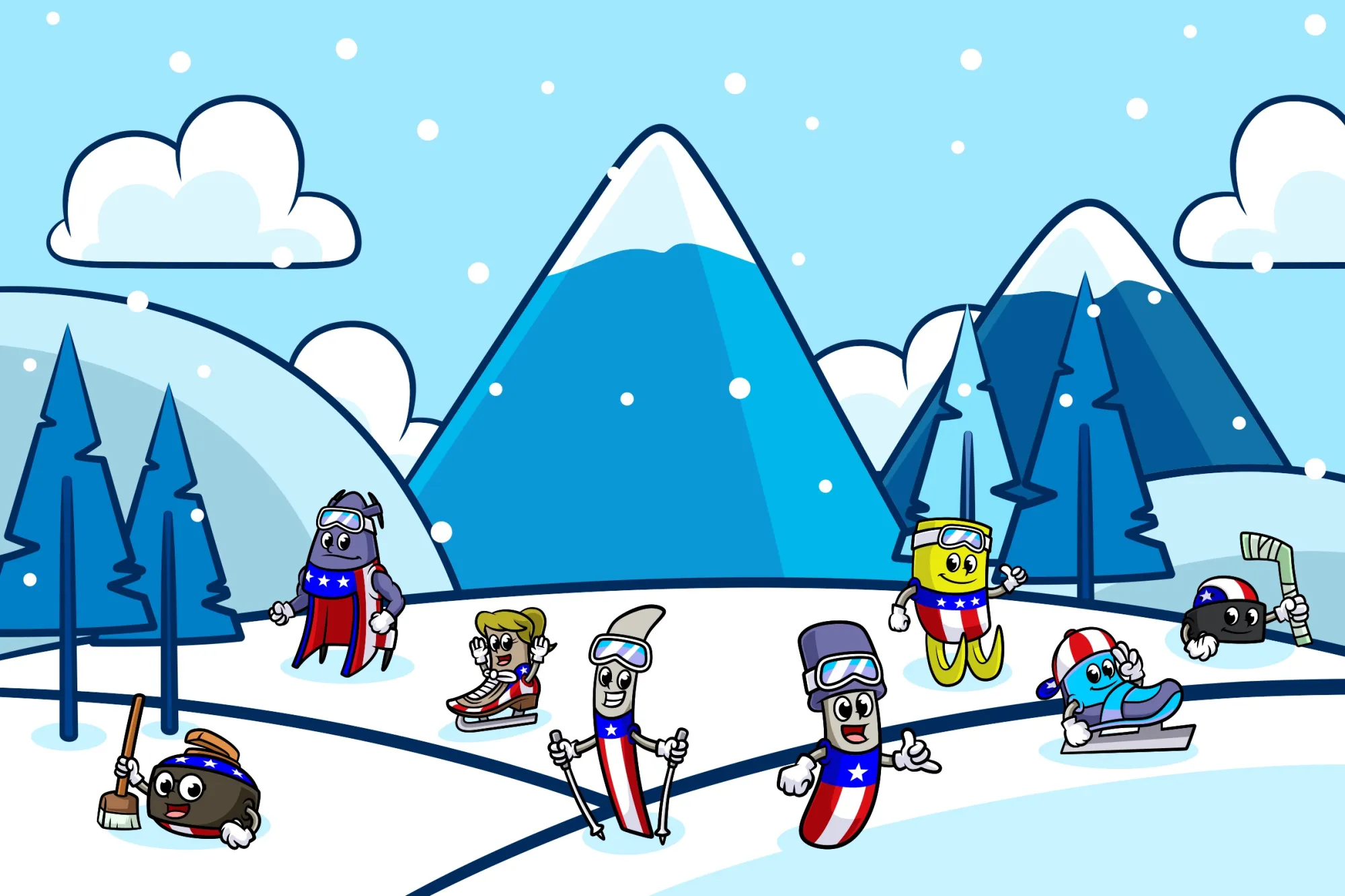
For a character‑driven version of this concept, The Aniletes’ winter‑sports universe shows how digital skiing and skating can turn into mobile‑first learning adventures in The Future of Edutainment: A Skiing Game Designed for Young Minds.
How AI Enhances Mobile Ice Skiing Mechanics
At the heart of any AI‑enhanced mobile skiing game is a shift from scripted behavior trees to real‑time, data‑driven models that watch how players move and then adapt the environment accordingly.
Real‑Time AI Mobile Gaming and Player Modeling
A real‑time AI mobile skiing game typically uses on‑device or lightweight cloud models that:
- Profile the player’s habits: Are they aggressive‑cutters or smooth‑carvers?
- Adjust AI‑opponent aggression and positioning in real time.
- Modify terrain features (gates, jumps, moguls) to match the player’s current skill.
These tools answer the AEO‑style question: “How does AI improve mobile skiing game mechanics?” by removing guesswork and replacing it with data‑driven, adaptive design.
For example, an adaptive AI skiing movement mechanic can:
- Change the spacing and sharpness of turns as the player improves.
- Dynamically add “jump‑chain” sequences when the player consistently completes smaller sequences.
- Tweak the AI‑opponent reaction latency so strong players feel like they’re racing an elite field, while beginners feel coached rather than crushed.
This mirrors the AI‑driven competitive skiing app trends seen in real‑world coaching tools and mobile‑first training systems, and it’s a similar philosophy to how The Aniletes structures its AI‑driven winter sports edutainment in The Science Behind Fun: How Our Winter Ski Game The Aniletes Builds Cognitive Skills.
Table 1: Core AI‑Enhanced Skiing Mechanics in a Competitive Android Game
| Mechanic | How It Works | Competitive / Learning Benefit |
| Adaptive AI‑opponent behavior | AI learns the player’s style and matches or slightly outpaces it | Feels like racing against a real rival, not a fixed AI |
| Terrain‑adaptive physics | Surface type alters friction, edge‑grip, and slide‑response dynamically | Encourages different skiing styles for different types of snow |
| Dynamic weather‑based challenge | Wind, snow, and fog change line choice and jump timing | Increases replay value and tactical depth |
| Real‑time path‑scoring | AI rates line‑quality, speed, and flow on‑the‑fly | Teaches proper racing‑line theory without text walls |
| Procedural course‑generation | Courses adapt to performance (shorter moguls, more jumps, etc.) | Keeps strong players challenged and weak players learning |
Adaptive AI Skiing Physics and Dynamic Conditions
To rank for “Android skiing simulator”, “dynamic weather skiing AI”, and “real‑time adaptive AI skiing physics”, a mobile ice skiing game must encode adaptive physics into the core skiing loop, not as a cosmetic add‑on.
AI‑Driven, Context‑Aware AI Skiing Mechanics
Top‑tier AI‑enhanced mobile skiing games use context‑aware AI skiing mechanics such as:
- Terrain‑adaptive turn‑response:
- Powder, hardpack, moguls, and icy patches each demand different timing and pressure.
- A real‑time adaptive AI skiing physics system adjusts friction, edge‑grip, and slide‑response based on the current surface.
- Weather‑adaptive line‑difficulty:
- Wind‑driven drift models change how jumps land.
- Fog and blizzard effects subtly slow player visibility, while AI opponents adjust braking zones accordingly.
These concepts are similar to context‑aware winter sports AI systems that infer snow conditions and motion‑state from inertial sensors, but adapted for low‑latency mobile performance.
The Aniletes’ character‑driven world gives a playful but grounded example of how AI‑powered winter sports edutainment can mirror real‑world training‑tool ideas, as explored in Where Fun Meets Learning: The Ice Skiing Game Transforming Early Education.
How AI Helps You “Win” a Competitive Android Ski Game
A common AEO‑style question is: “How do you win a competitive Android ski game?” On the surface, it’s about timing, lines, and reflexes. But at the AI level, it’s about how the system constantly reshapes the race to match you.
Modern AI‑enhanced skiing games help players win by:
- Teaching ideal lines with AI‑generated “ghost‑racer” overlays.
- Soft‑reducing difficulty after repeated mistakes (shorter moguls, wider gates) until the player improves.
- Scaling AI‑aggression and track‑density so that “winning” always feels like a small stretch, not a guaranteed failure.
These patterns are echoed in The Aniletes’ edutainment‑style approach to winter sports, where skiing‑based gameplay subtly teaches discipline, line‑choice, and patience, much like the way Winter Skiing Games and Early Childhood Motor Skills show how play quietly becomes learning.
AI‑Powered PvP and Multiplayer Mechanics
Beyond single‑player AI, the most advanced competitive Android ski games layer AI‑powered PvP skiing mechanics on top of real‑world multiplayer.
PvP‑Plus‑AI Design Patterns
- Smart matchmaking:
- AI ranks players by skill, similar to many strategy‑game systems.
- Before the race, AI pre‑generates course variants tailored to the skill range of the field.
- Dynamic difficulty within PvP:
- In laggy conditions, AI‑smooths out the skiing‑physics feel, so competitive‑ranking platforms still display tight races.
- AI‑as‑filler opponents:
- In low‑population lobbies, AI‑generated skiers fill the grid, obeying the same physics as humans, so the race feels fair.
This approach answers: “What are the top AI‑powered skiing apps on Android?” because it marries multiplayer mobile skiing game design with generative AI mobile sports game techniques.
The Aniletes’ broader AI‑driven winter sports edutainment mindset fits here, especially in The Aniletes: Ice Skating Game, where character‑driven skiing and skating modes feel like both fun races and gentle training tools for line‑control and rhythm.
Table 2: How AI Systems Support Competitive Skiing Experiences
| System | Target Question | How It Works |
| Adaptive AI‑opponents | “How does AI enhance mobile skiing game mechanics?” | Opponents adjust line‑choice, speed, and reaction‑time based on player skill |
| Real‑time AI‑path coaching | “How to create AI‑enhanced mobile game mechanics?” | Offers subtle hints, line‑visualizations, or ghost‑run overlays |
| Dynamic weather‑and‑terrain AI | “What makes a skiing game competitive?” | Changes course‑feel so players must adapt, not memorize |
| Skill‑and‑behavior modeling | “Best AI techniques for competitive Android games?” | Builds player profiles to balance AI difficulty and matchmaking |
| Procedural course‑generation | “Machine learning in mobile skiing mechanics” | Creates fresh layouts that still feel “racing‑track‑like.” |
FAQs
How does AI enhance mobile skiing game mechanics?
AI enhances mobile skiing mechanics by using real‑time player modeling to adjust AI opponents, track difficulty, and course layout so the game stays challenging yet fair, making it feel like a smart AI‑enhanced skiing simulator on Android.
What makes a skiing game competitive on Android?
A skiing game becomes competitive on Android when it combines skill‑based controls, dynamic AI opponents, adaptive tracks, and AI‑driven physics so each race feels like a live event instead of a fixed replay.
What are the best AI techniques for competitive Android skiing games?
Top techniques include adaptive difficulty adjustment, player‑behavior modeling, AI‑driven opponent AI, and procedural course generation that responds in real time to how the player turns, jumps, and reacts.
How do you win a competitive Android ski game?
You win by mastering clean racing lines, well‑timed turns and jumps, and adaptive decisions under pressure, while AI‑enhanced mechanics gently tune difficulty and AI‑opponent behavior to match your skill.
Are AI‑enhanced ice skiing games considered educational or just entertainment?
AI‑enhanced ice skiing games can be both: they entertain with physics‑based skiing while teaching timing, spatial awareness, and decision‑making, especially when designed as edutainment‑style mobile skiing experiences.
Winning the Next‑Gen Competitive Android Skiing Landscape
In 2026, the most compelling AI‑enhanced mobile ice skiing game mechanics are those that meld physics‑based realism with learn‑on‑the‑fly AI systems. From context‑aware AI skiing mechanics and adaptive AI movement to real‑time AI mobile gaming and AI‑powered PvP skiing mechanics, competitive Android skiing games are no longer just about graphics and bugs; they’re about how smartly the system understands and responds to the player.
Explore The Aniletes’ winter‑sports AI‑driven experiences and see how AI‑enhanced mobile skiing game mechanics can be both fun and deeply educational. Visit The Aniletes: Ice Skating Game and start a journey where the mountain feels like both a race and a classroom.